


Page 33 - CPAAC_Spring2017
P. 33
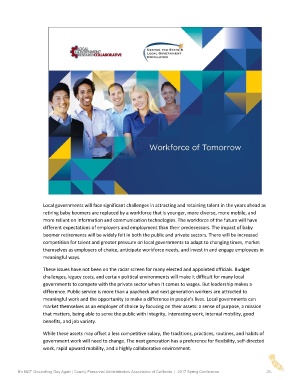
Local governments will face significant challenges in attracting and retaining talent in the years ahead as
retiring baby boomers are replaced by a workforce that is younger, more diverse, more mobile, and
more reliant on information and communication technologies. The workforce of the future will have
different expectations of employers and employment than their predecessors. The impact of baby
boomer retirements will be widely felt in both the public and private sectors. There will be increased
competition for talent and greater pressure on local governments to adapt to changing times, market
themselves as employers of choice, anticipate workforce needs, and invest in and engage employees in
meaningful ways.

These issues have not been on the radar screen for many elected and appointed officials. Budget
challenges, legacy costs, and certain political environments will make it difficult for many local
governments to compete with the private sector when it comes to wages. But leadership makes a
difference. Public service is more than a paycheck and next generation workers are attracted to
meaningful work and the opportunity to make a difference in people’s lives. Local governments can
market themselves as an employer of choice by focusing on their assets: a sense of purpose, a mission
that matters, being able to serve the public with integrity, interesting work, internal mobility, good
benefits, and job variety.

While these assets may offset a less competitive salary, the traditions, practices, routines, and habits of
government work will need to change. The next generation has a preference for flexibility, self-directed
work, rapid upward mobility, and a highly collaborative environment.

It's NOT Groundhog Day Again | County Personnel Administrators Association of California | 2017 Spring Conference  -31-

